Tally of CA's HSR
Update for November 2026
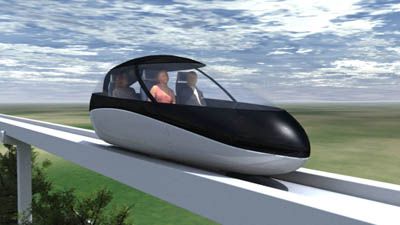
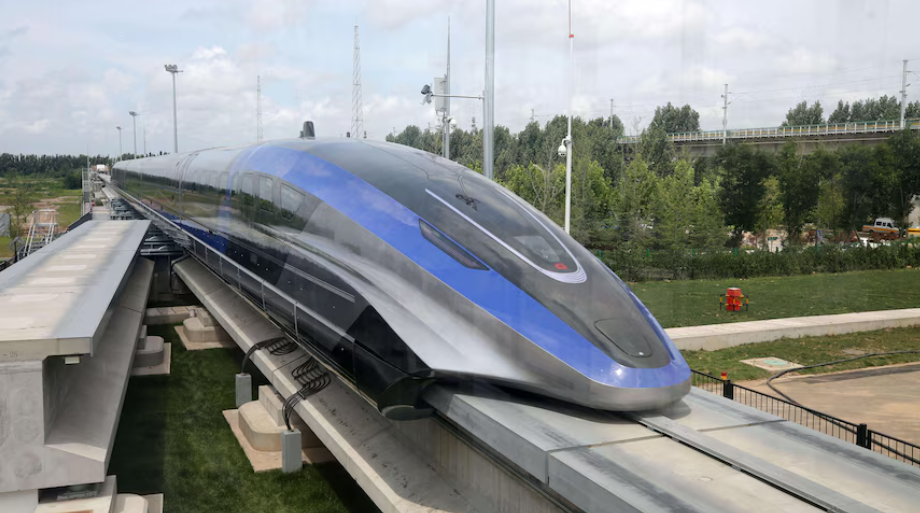
photo credits: CA HSR bridge / Applied Levitation
In 2008, wording of the ballot language for CA’s High-Speed Rail (HSR) inaccurately claimed the 800-mile high-speed rail network would be built for a cost between $30 to $40 billion. The bond measure pledged passengers a LA to SF travel time of 2 hours and 40 minutes. The $9.95 billion was a bond measure to secure additional federal and private funding, which would begin ridership in 2020.
Similar to today’s social media, headlines are often intentionally misleading to sell a product. Many people who voted yes on the 2008 bond measure assumed its title headline would allow CA to build a high-speed train for $9 billion.
After the bond measure was approved by voters, the project proceeded seven years before the first shovel hit the dirt for its official beginning. Consistent with its political process, even though the project had provided URS $800 million for engineering design, consulting, and change order fees, the project began without a defined route or complete Rights-of Ways. From a certain perspective, this is comparable to beginning construction of a towering high-rise building without a full set of blueprints, without owning the property, and only having enough money to start the ground floor. This same perspective would consider this unimaginable, unreasonable and illegitimate.
Existing Rights-of-Ways
The concept of California having a high-speed train began at least six decades ago. CA’s I-5 freeway is designed with a wide median as a passenger rail Right-of Ways (ROW). The CA HSR isn’t a new idea. However, today’s calendar is past a quarter century into the 21st century, and technology has progressed since train technology was introduced 200 years ago. California has the opportunity to lead the world in advanced transportation technology; however, this requires using advanced transportation technology.
How does CA’s HSR continue?
With $16 billion already spent on a partially completed 120-mile section of an 800-mile project, how is it possible to build the $231 billion transportation project with a $1 billion annual budget? Is it accomplished by the temporary appointment of a finance administrator; as directing manager of California largest transportation project? Or is the appointment simply another illustration of what attempted political rescue looks like? Is it a transportation project or is it a large political issue? This type of political process is seen by the majority of the aware public as another illustration of deception and malevolent misuse of valuable tax dollars. It’s a display that common sense is contrary to the procedure of government politics.
Enabling the private sector
What approach would a private sector company take to run the project as an actual business? First is to look at hard cost numbers. Assuming the business could access CA’s quoted budget amount of $40,000,000,000, divide that amount by the distance of 800-miles. That provides an expense of $50,000,000 per mile. In 2008, the cost of CA’s HSR was estimated at $75,000,000 per mile (at grade), making that train technology unsuitable. A private sector company would consider this impossible and search for alternatives.
Let’s legitimately look at this. A 10-year repayment of $50 million per mile is a monthly payment of $417,000 @ zero interest; and multiply that by 800-miles: $333,600,000 per month, $4 billion per year. As a comparison to how big that number expands to, one has to consider today’s income of insurance companies with their car insurance. One of the large agricultural counties In Central CA has a population of one million and there are 700,000 registered vehicles. The average vehicle insurance policy is $100 per month per vehicle: $70 million per month: $840 million annually. CA has over 30,000,000 registered vehicles and receives an average of $400 for registration per vehicle. It’s annual income from vehicle registrations exceeds $12 billion.
Financing is a company’s most important aspect for viability of survival. For a private company to take on such a task, it has to analyze its ability for generating revenue. In this task, the entity would have to understand all aspects of transportation: including the necessity for alternative modes of passenger mobility. What are the alternatives to the HSR standard? The reality of trains is that its basic technology is 200 years old. Society has progressed technologically over the past 200 years, so much so that trains are no longer suitable as a mode of passenger transportation. What technology replaced the train?
A private sector business has to be cognizant about the tentacle effects that transportation holds. It’s imperative to recognize that transportation is the foundation to all urban growth. Entertaining the conversation asks the question: what replaced the train as America’s primary source of transportation? The assumed response of airplanes or automobiles is based on inaccurate information. The train was replaced by urban growth and design of land-use development.
Another important question a private sector business asks, as for any industry; what is its competition? What advantage would a train have to offer to regain justification in rebuilding its ultra-heavy infrastructure for ridership that validates a significant ROI (Return on Investment) for operational expenses and repaying investors? These are fundamental questions that a start-up business would ask. The largest competitive share for transportation customers would be automobile customers. What does an automobile offer? Trip independence. A train carries large groups of people from one station site and the train stops at every station site. Every train follows a fixed schedule, traveling back and forth based on ridership and train availability within the network. With this understanding, train technology has to develop smaller load capacity and have more frequent trips. It has to have the ability to adjust its technological capability to serve a larger segment of the population by network expansion, and significantly increase its speed. The automobile offers door to door service, fixed rail doesn’t.
A private company would conclude two vital issues: the train infrastructure surpasses its ability to support ridership capability of funding the project. This requires an alternative form of transit technology and additional sources of income. History shows that people in the 1800s were wonderfully creative; they overcame the infrastructure costs by building towns and cities. Today’s technological advances provide much faster transit systems that utilize stronger, safer, and much lighter infrastructure, that are far less expensive than nostalgic train technology.
The conclusion is that CA’s HSR is a political project. It used the word ‘transportation’ to sell it to the public as its method to create cash flow to political insiders, which serve to support the continuance of the political machine.
For a private sector business to build a large transportation project that provides mobility options to the public, the project has to attract ridership by creating an advantage over its competition: the automobile. This is incentive to entrepreneurs: creating a brand-new market.
Integrating CA’s HSR to serve the public with a transportation alternative solution
In a September 2025 CATTCC.org article: Integrating California’s High-Speed Rail, it highlights why advances in transportation are important;
To integrate traffic into a sensible quick and convenient mobility solution, the first question adults ask: what happens to my car? People love their cars. In the car culture, a car is their second most expensive possession, they pay hundreds of dollars each month just to insure it, hundreds more to maintain it.
The main consideration in transportation and urban growth is land-use. After listening to government workers, officials, planners, politicians, and the public; it’s exceeding clear there’s a terrible misconception and an important distinction between land-use design and land-use zoning. There are actually people cognizant to the distinction, perhaps they work in the real estate development industry, or perhaps in hidden segments of government agencies, or in an obscure non-profit sector. The critical point in understanding the distension between the two, is that there are four types of land-use: nature, agriculture, transit-oriented design (fixed-rail transit) and automobile centric land-use design. Land-use is the overall use of land and depicts urban growth being dependent upon its primary source of transportation. Whereas land-use zoning is about variations in local building allowances.
California’s growth over the past 90 years has predominately been with automobile centric land-use development. Automobiles are unsustainable. Building a society upon an unsustainable foundation is problematic.
How is this important to CA’s HSR? Land-use. The transit-oriented land-use design and the automobile centric land-use design are incompatible. Trains require transit-oriented land-use design, the automobile centric land-use design is dependent upon cars for transportation, and trains are intrusive to traffic flow. Today’s advanced transit system designs can accommodate both types of land-use and provide modern transportation solutions.
Is it possible for the state of CA to build its heavy train infrastructure using brand-new advanced transit system technology? No, the government is risk adverse and is trained to only follow procedure of someone else’s example. Government mandate does not consider itself a test ground. However, the state does partner with organizations that provide brand-new industry innovative technology, which allows introduction from the private sector to introduce new transportation system technology.
The modern transit-network system technologies bring two distinct advantages beyond trains: independent travel times and much faster travel speed than trains, and cars. These new transit technology systems are also able to attract and provide infrastructure financing; plus, environmentally clean energy and the potential of sustainability for urban growth. With this brand-new transit technology and its ability to support its own infrastructure funding mechanism, the burden of tax debt is removed. This allows economic sustainability to the communities it serves.
CATTCC.org
Sustainable Transportation