Urgency to fix urban traffic
Asking the questions of what causes traffic jams and who is responsible for clogged traffic?
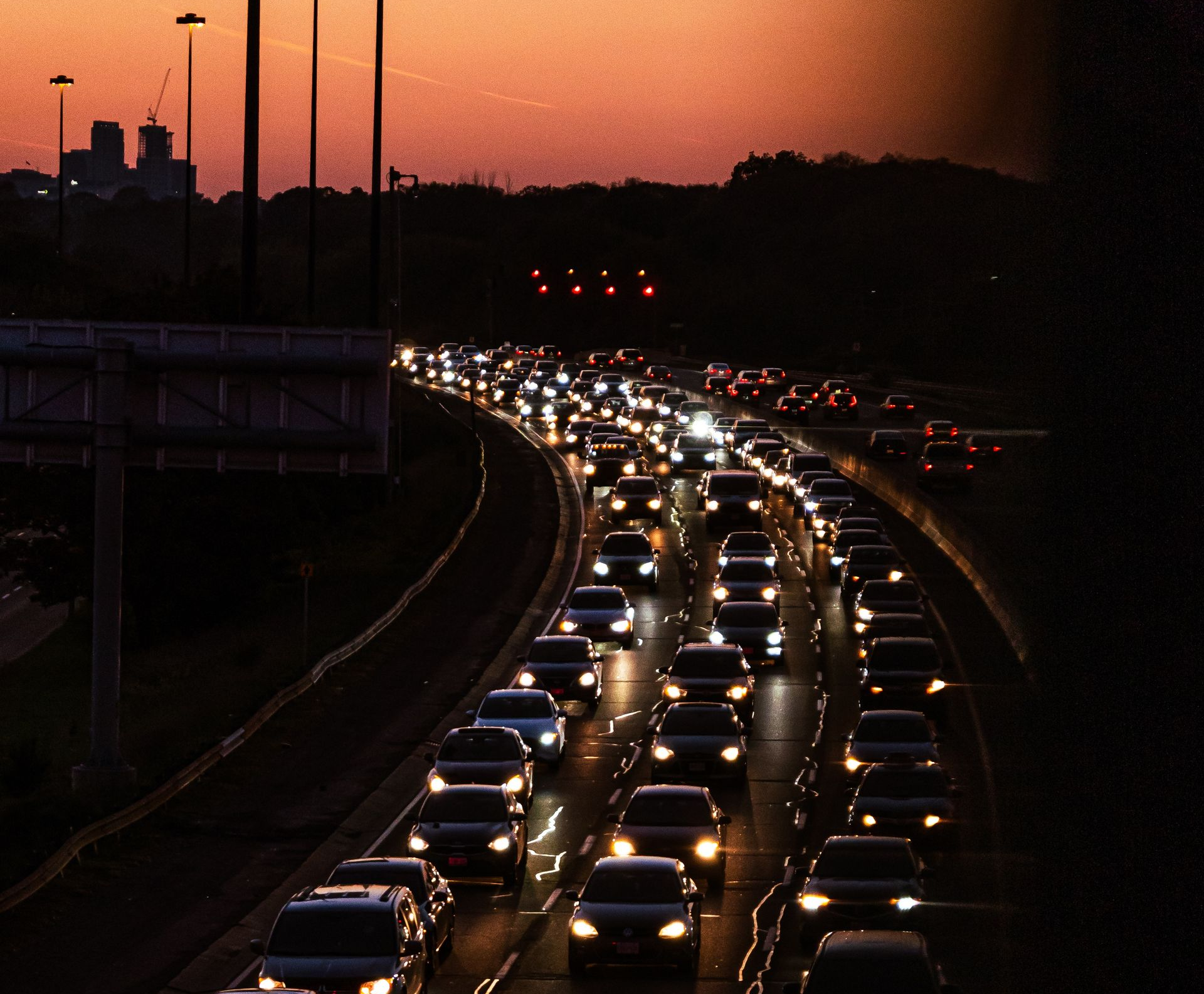
photo credits: pixabay
There’s a serious importance in continuing the theme of the two previous articles.
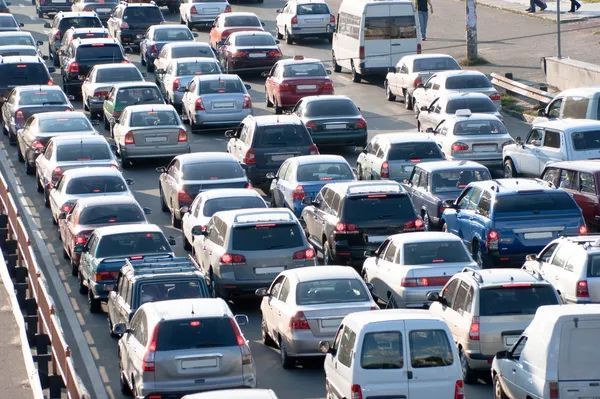
Driving is a problem when traffic is stopped on the freeway. Answering the question of why traffic congestion constantly builds up and clogs traffic flow: involves an in-depth study through empirical corroboration. Another crucial question to ask: who is responsible for causing traffic jams? The answer as a social reaction: it’s too many cars; however, empirical study shows traffic jams are caused by the politics of legislators (federal, state and local) and urban planners.
What causes traffic jams? The answer identifies and provides an ability to fix the problems. The explanation has to do with a municipality’s urban growth. The fundamental component to all urban growth is its primary source of transportation. With only four types of land-use (nature, agriculture, transit-oriented, and automobile centric land-use design), freeway traffic is a dysfunctional design issue within automobile centric land-use.
The supporting documentation is extensive. Here is a very short list of case studies with corroborative evidence: https://www.researchgate.net/publication/263326710_Automobile_use_and_land_consumption_Empirical_evidence_from_12_cities It’s the theory in this case study which suggests that as automobile mode share increases in a city, the amount of land used for transportation also increases, whereas the land available for other uses decreases. Also, this case study explains that as early as the 2000s, Crawford (2002) suggested that cars consumed as much as 70% of the downtown land in American cities.
http://www.autolife.umd.umich.edu/Environment/E_Casestudy/E_casestudy.htm is a historic analysis in the growth of the automobile and its land-use consumption. Interestingly, it mentions a 1960 study of downtown Los Angeles which acknowledged 59% of land-use was allocated to the automobile for parking and streets.
https://en.wikipedia.org/wiki/Car_dependency This link is due to the popular use of Wikipedia as a reference standard. This illustrates the lack of comprehension with the term ‘land-use’. The term ‘land-use’ is confused with a community’s zoning code ordinances. An area’s building regulations are completely different than the definition of what land-use is. The article concludes that mixing land-use is a beneficial creation of the 15-minute cities. The entire article is typical to academic’s lack of simple comprehension that there are only four types of land-use: nature, agriculture transit-oriented, and automobile centric land-use design. This isn’t a bad article, just lacks needed information.
https://www.urbanismnext.org/potential-impacts/auto-oriented-land-uses highlights social changes with AI and autonomous cars, micromobility programs they support (bicycles) and the increase to online shopping. This link is a high school level website, filled with AI content, from the University of Oregon and is a perfect representation of government institutions.
https://www.sciencedirect.com/science/article/abs/pii/S0264837714002154 article addresses importance of land values; as a large consideration in establishing transportation costs.
https://www.sciencedirect.com/science/article/pii/S2214629620300633 “The political economy of car dependence: A systems of provision approach”
https://transportgeography.org/contents/chapter8/urban-land-use-transportation/ article makes the correlation of transportation to an area’s social and economic makeup; with the trendy phrase of “spatial accumulation”.
https://www.planetizen.com/node/72454/land-vehicles-or-people an older article was written by Todd Litman, one of the most respected, knowledgeable professionals and prolific authors in the mass transit industry.
Link to the book: The Geography of Transport Systems. This additional link is to Chapter 4 from his book: (Sixth Edition; Jean-Paul Rodrigue (2024), New York: Routledge, 402 pages. ISBN 9781032380407) Environmental Footprint of Transportation – with this quote: The footprint of transportation has reached a point where 30 to 60% of urban areas are taken by road transportation infrastructure alone. In more extreme cases of road transportation dependency, such as Los Angeles, this figure can reach 70%.
City council decisions
Another valid question: are the people that rule city councils, and county supervisors (the people responsible for approving large high-density real estate development projects), are they cognizant how much land automobiles consume? With the increases to traffic load, evidence reveals that large tract housing developments and large apartment complexes, cause a detrimentally negative consumption of land for the excessive demand to existing road capacity; within automobile centric land-use. Again, the fundamental component to all urban growth is transportation. For automobile centric land-use, a high-capacity road system is the most important aspect of real estate development. To allow large scale real estate developments without additional road infrastructure and adding numerous lanes to accommodate every mile traveled for the traffic load increase, this practice is nothing less than deliberately creating land-use dysfunction: which causes massive traffic problems. The continuation of this practice is extremely harmful economically and socially.
The economic harm is penalizing area residents to suffer lost time and wages due to unwarranted traffic delays. This is detrimental to a local and regional economy. Conversely, this link is instrumental as a valid and sustainable solution for integrating CA’s future growth with its transportation demands.
The use of automobile centric land-use development with high density real estate without adequate road infrastructure is transit oriented land-use: which requires a fixed-rail transit system. The automobile requires up to 70% of the land. What this means, is that the real estate investor’s high profit centers; pivoting their funding into high density apartment complexes is an inappropriate land-use within the automobile centric land-use design. These development properties are valid for transit-oriented land-use. For legislative bodies to stimulate land-use dysfunction, is astoundingly detrimental to every aspect of that area’s quality of life.
Sustainable land-use growth
Sustainability is important to urban growth. Since transportation is the foundation to all urban growth, sustainable transportation is an important consideration. In the 1980s, the UN established the "Brundtland Report", as the result of its World Commission for Environment and Development. It identifies urban sustainability in three segments: environmental, economic and social.
Here are two links to previous CATTCC articles regarding awareness to the Current dilemma of transportation and suggestions of How to improve transportation.
A current case headline from the Pacific Legal Foundation: https://pacificlegal.org/events/pacific-legal-foundations-the-cases-that-zoned-america/?utm_source=li&utm_medium=social&utm_campaign=euclid&utm_content=events
Land-use solutions for transportation
So, what is the problem and what are some of the immediate solutions? The realistic issue can simplistically be explained as an incomprehension of the automobile centric land-use design. As pointed out earlier; the automobile centric land-use design requires up to 70% of the land-use consumed by the automobile. In the automobile centric land-use design, a large apartment complex needs to be built with more than one car per apartment: as well as adding new traffic lanes to accommodate the additional traffic load. These road lanes are necessary to carry the additional traffic loads to the automobile’s new destinations. To permit land-use zoning allowances without accommodating the additional heavy traffic loads for a single high-density apartment development is detrimental to existing residents; with the impeding massive inconvenience in time, which negatively effects that local economy. Another of the unrecognized negative effects are the negative health impacts of stress related traffic loads.
Referring this issue as an incomprehension of the automobile centric land-use design is to understand that automobile centric land-use utilizes a sporadic sprawl single-story building design. Again, in the automobile centric land-use design, up to 70% of the land-use is dedicated to the automobile. Just because sprawl might be unpopular or has incurred a negative social title, its social popularity is irrelevant to its requirements dedicated to the automobile.
Urban growth planners and politicians making urban growth land-use decisions have to understand the differences between automobile centric land-use design and transit-oriented land-use design, to make decisions that affect urban sustainability. All mid-density to high-density multi-story land-use development is transit-oriented land-use design. Automobile centric land-use requires sprawl development with roads. The larger the sprawl, the more roads and additional freeway lanes are required. Complex networks of 20 lane, or 50 lanes to over 100 lane freeways; are necessary to carry the heavy traffic loads for the automobile centric land-use urban sprawl design.
The only way to accommodate the desired high-density urban growth, is with the vertical growth of transit-oriented land-use design. The transit-oriented land-use design can be sustainable, dependent upon the attributes of each development’s design and the accompanying transit component. This is addressed easily by building modern transit technology networks within existing transportation corridors. Land value appreciates within ¼ mile of a fixed-rail transit station. Beyond that limited walking distance, cars can be used within the automobile centric land-use designed areas.
( https://urbanland.uli.org/residential/home-values-near-transit-outperform also, https://toljcommercial.com/value-of-properties-near-public-transport/ )
Primary consideration to all urban growth
Transportation is the foundation to all urban growth. To acquire sustainable growth, an area’s primary source of transportation has to be sustainable as well. The definition of sustainable urban growth is pointed out in the UN’s Brundtland Report. Sustainability includes environmental, economic, and social components. The misappropriate planning in building dysfunctional urban growth, causes catastrophic traffic problems which lead to economic and social problems. Who will tell the planners and the government officials that their continual expansion is horribly wrong? How can they begin to understand and put an end to their urban dysfunction?
It’s human nature to reject being told we’re wrong. It’s human nature to become defensive and angry when someone makes an accusation against us with a derogatory or incriminating accusation. Yet, it’s the horrid traffic and road conditions which stand as evidence of incompetence.
Which areas are affected and how can they improve? It begins at the federal level. Interstate highways allocate federal money for new construction and road maintenance of these interstate highways. Many states and municipalities feed their surface street traffic directly onto these interstate freeways without being required to accommodate the provision of adding additional lanes. This accepted trend sends undo stress to interstate travelers with burdensome traffic.
As an example, at the federal level: a traveler driving a car from Denver to Sacramento and has to go through Salt Lake City, Utah. Why is a driver from another area taxed to be halted while driving through Salt Lake City? Why is that incompetent road planning agency allowed to receive federal funds for its incompetent road planning of over burdening the existing traffic load? Again, that local agency feeds its localized surface street traffic to interfere with the traffic flow of a Federal Interstate.
Another example, and the trend setter for incoherent and dysfunctional road planning is California. The I-15 freeway from Los Angeles to Las Vegas, or I-80 from Sacrament to Reno are two sections of mystery incomprehension. I-15 westbound from Vegas is 3-lanes. Within 5 miles of the CA border westbound, the road narrows to two lanes. Did any of the traffic load disappear? Is this merely an indication to the rude, disrespectful, and contemptable attitude that welcomes drivers to California? Likewise, traveling on I-80 westbound from Reno towards Sacramento, it’s a 4-lane freeway that was completed in 1964. By not adding additional lanes, one can only ascertain that the road planners have not accounted for an increase in traffic load over the past 60 years. The closer to heavily populated areas, the denser the traffic becomes which slowly reaches a crawl, rather than flowing at the posted speed limits. And this is what the nineteen cents per gallon the federal gas tax covers? 60+ years of road maintenance to maintain inadequate roads?
Conclusion
Slowed and stopped freeway traffic is problematic due to incompetent legislators and planners. A competency test needs to be implemented into all government urban growth and road planning decisions.
CATTCC.org
Sustainable Transportation