Conflicts of Urban Growth and Traffic
Traffic jams are a product of flawed design
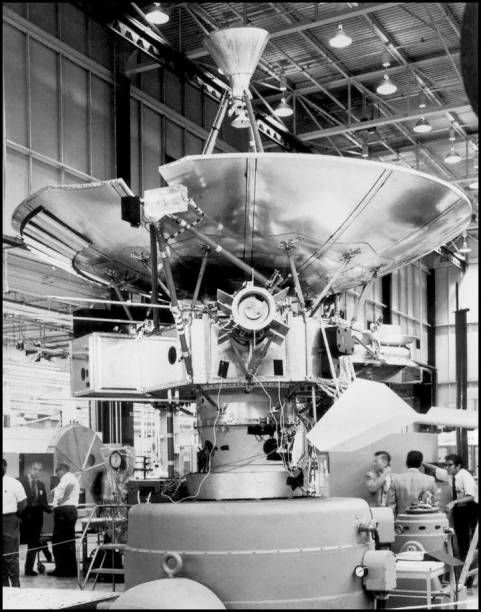
Photo credits: depositphotos.com / gettyphotos
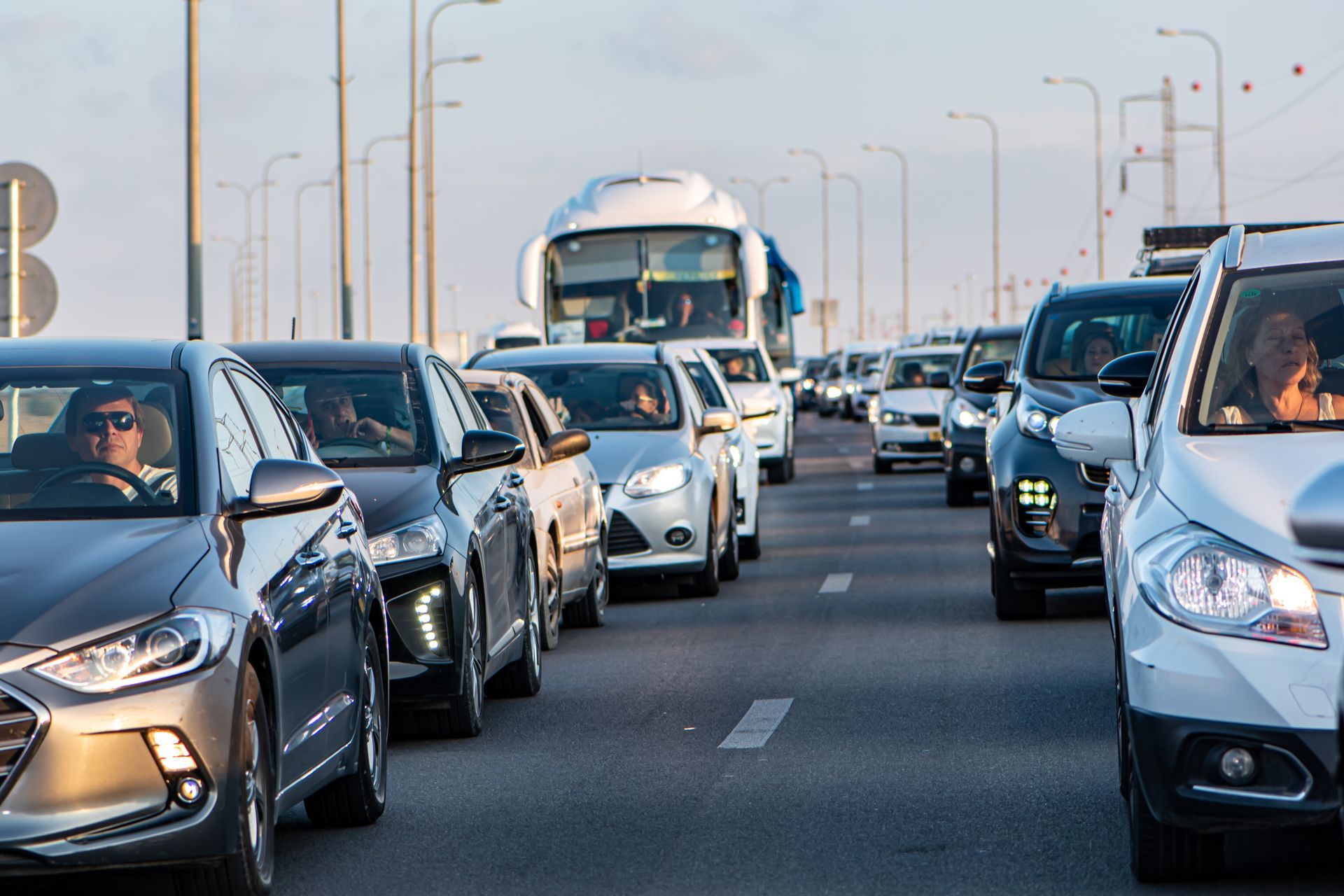
Orating to the conflict between heavy traffic and urban growth, the problem is easily identified. As an area’s population increases, urban growth expands, the core roads fail to equally expand to support the increase of traffic load, and obviously; conflict is the consequence.
The reason as to why this occurs is also obvious by understanding two fundamental issues. First: all urban growth is based on an area’s primary source of transportation. Second: there are only four types of land-use: nature, agriculture, transit-oriented land-use, and automobile centric land-use design. Nearly all western culture, certainly in the US; since the 1930s, has been built upon the automobile centric land-use design. When automobile centric land-use development reaches high-density, it becomes dysfunctional. The transit-oriented land-use design supports high-density and vertical development, automobile centric land-use does not. Moving a heavy traffic load of passengers is achieved by a transit system.
One of the first things to acknowledge about cars and the automobile centric land-use design: the automobile consumes from 30% to 70% of land-use for roads and parking. For those who have difficulty in math: in some areas it only leaves 30% of land for the human component. The sprawl design is ideal for privacy but, requires massive land consumption for its open spaces, single story commercial and residential urban growth design. By zoning a growing allotment to high-density urban growth and apartment dwellings, the limited space of preexisting road infrastructure is exacerbated by its restricted road availability and the entire area’s land-use becomes completely dysfunctional. Again, repeating the CATTCC message; functional land-use design for high-density urban growth requires concentrated corridors with a networked transit system.
In his article: ‘Transportation Land Valuation’, Todd Litman makes this reference:
This does not mean that automobile-oriented transport systems always actually require several times as much land for transport facilities as multi-modal systems. Even cities built before the automobile often had wide roads to accommodate wagons and parades, and to provide adequate sunlight and air flow. But high per capita vehicle ownership and use tend to increase transport facility land requirements. Walking cities typically devote less than 10% of land to transport while automobile-oriented cities devote 20% to 50% (Dimitriou, 1993, p. 136). Newman and Kenworthy (1998, table 3.9) found that automobile dependent cities average about 7 meters of road length per capita, while European cities, which have more balanced transport systems, average about 2.5 meters. Parking supply follows a similar pattern. This indicates that automobile-orientation increases transport land requirements 3 to 5 times. Put another way, 66% to 80% of the land devoted to roads and parking facilities in modern cities results from the greater space requirements of automobile-oriented transport.
Many other studies have analyzed this trend and drawn similar conclusions.
From the article by Chris McCahill and Norman Garrick at ResearchGate.com
... For example, when coupled with the extreme amounts of land required for parking, cars consume as much as 70% of downtown land in some American cities (Crawford, 2002). In a study of 12 US cities, a 10 percentage points in the portion of commuters traveling by automobile was associated with an increase of more than 2500 m 2 of parking per 1000 people and a decrease of 1700 people per km 2 (McCahill and Garrick, 2012). In cities with higher rates of automobile use (roughly 30% more driving), about twice as much land is committed to parking for each resident and employee (McCahill and Garrick, 2012). ...
Another link: https://asmr.education/faq/car-dependency/urban-land-parking-roads-north-america -
In a typical North American city, somewhere between 30% and over 60% of developed urban land is given over to roads, highways, parking lots, and parking structures. Sun Belt and auto oriented cities tend to sit at the higher end of that range, while older, denser cities with transit networks come in lower. These percentages have enormous consequences for housing costs, environmental health, and quality of life.
Government planning
Far too many government workers and elected officials that dictate and rule urban growth planning; creating an area’s zoning definitions, lack the simple awareness of how much land is consumed as a condition of the automobile centric land-use design. This causes an area’s transportation to become dysfunctional.
Traffic congestion in high density urban growth can only be mitigated by the utilization of the transit-oriented land-use design. This, obviously, necessitate a transit system to serve as the primary source of that area’s transportation. This solution is problematic for the risk adverse policy of governmental agencies to use modernized and advanced transit system technologies.
Autonomous transit vehicle technologies have been available with advanced transit technology systems since the early 1970s. These new transportation network technology systems are unfavorable to the antiquated technology of the politically established train and streetcar industries.
The impetus of the CATTCC article: Implementing tomorrow’s transportation, makes the point that the automobile mode of transportation remains the same; from when cars were invented 125 years ago. Automobile’s advances are the technology developments from other industries. Advancing is the natural progression from society’s intellectual evolvement. Yet, the aerodynamics and fashion styling of today’s supercars, the pentacle of automobile design, remains the same as they were in the 1960s. The prominent automobile changes have been adaptations of technology advances from the metallurgy, composites, and computers industries, not the automobile.
To offer an explanation as to why automobiles remain the West’s dominant source of transportation is moot; with government regulation comes politics and lobbyists.
The article: Transportation overview, part 2 of 3, highlights a brief historical analysis of America’s transportation. One of its most important statements: The requirement for transportation’s future is sustainability.
Trains are rudimentarily sustainable. And, they’ve been steadily carrying goods to markets for 200 years. Again, this well-established mode of transportation has tremendous political lobbying strength, its antiquated transportation technology has no relevance to innovation.
Solutions
The importance for new transportation technology advances are constrained by the lack of advanced transportation research for new modes of transportation. The current trend is to extend automobile automation, with some research dollars going to electric airplanes and helicopter drones. The socioeconomic need is for technology to advance transportation alternatives for a brand-new mode of transportation: beyond the automobile and aeronautics. Civilization has passed the quarter century mark from the year 2000. Although society has developed incredible technological advances in communication, information storage, metallurgy, and composite manufacturing, transportation hasn’t had an introduction to a new mode of transportation in over 100 years.
Do possibilities exist to discover a brand-new mode of transportation? Over 50 years ago, in 1973, Pioneer 10 was the first spacecraft to perform a gravity assist maneuver to escape Jupiter’s gravitational pull. By using gravity assist, its heliocentric escape velocity was propelled to 82,000 mph from its entry speed of 23,000 mph.
NASA’s recent Parker Solar Probe mission reached the fastest speed ever achieved by mankind, over 400,000 mph. This was also accomplished by the utilization of gravitational attraction.
This natural motion, holds potential as a methodology for use as a brand-new mode of transportation. New theories relating to electrogravitics have the opportunity to expand transportation into the next intellectual paradigm towards the progression with evolving technology.
CATTCC.org
Sustainable Transportation