CA HSR update 2026
Update on California's High Speed Rail project
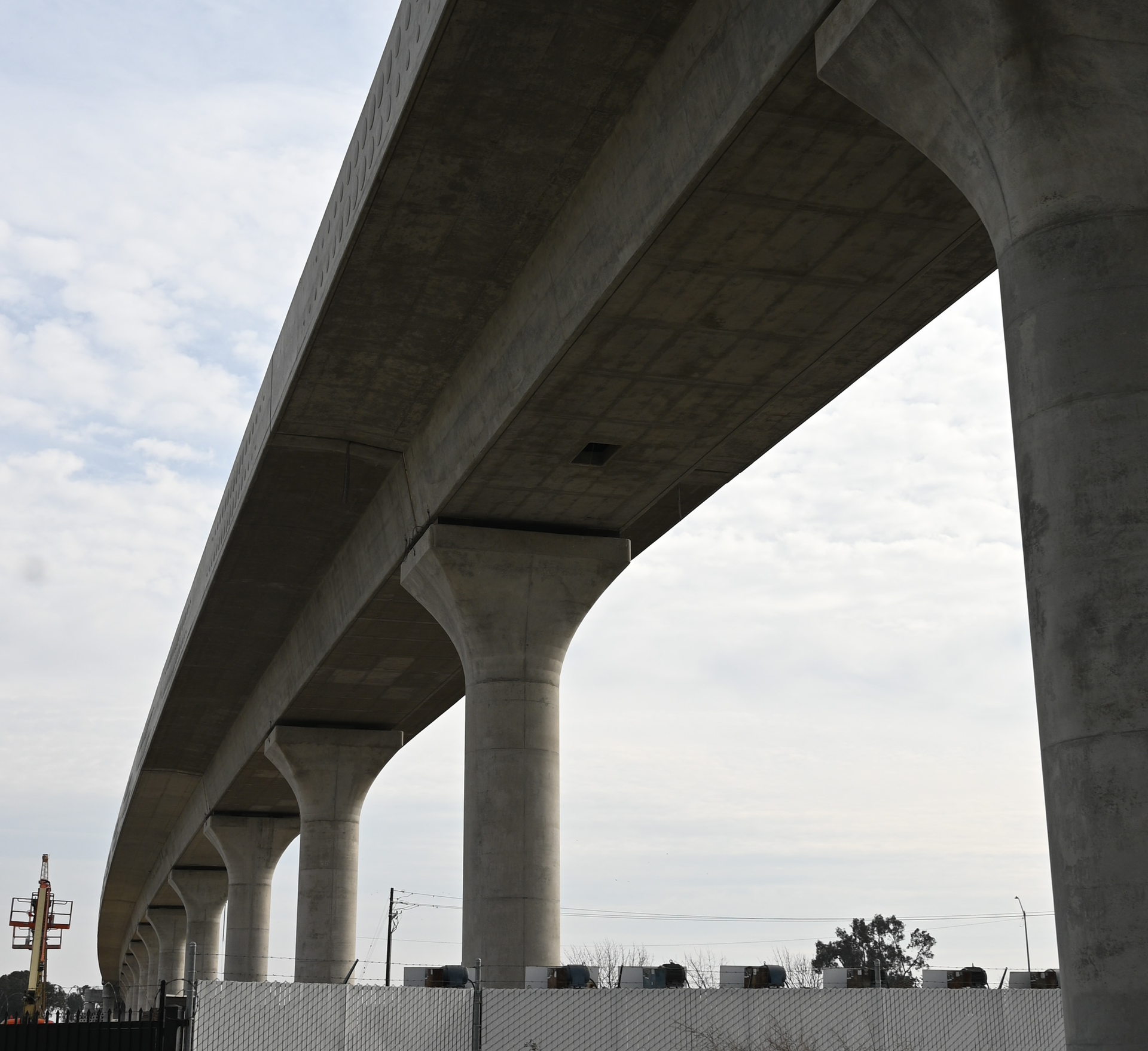
There are a lot of things happening with California’s High Speed Rail (CA HSR) project. The new High Speed Rail Authority (HSRA) CEO, Ian Choudri, hired in August 2024, is doing an exemplary job of reviving a dead horse. The project’s former 20-year status of “gravy train” as a consequence of being a politicized pork project subsidizing the pay-to-play elitism profiteering, has finally changed course with the passing of its former political champion. The political process always includes a large portion of hyperbole. Delusion is more often than not, the reality of political process. The question is, can Choudri recover from 18 years of that process.
A May 25 Planetizen article shares the same opinion as CATTCC. That exposé explains several of HSRA’s past mis-directions in planning. It’s also in support of Choudri’s plan to extend the current line and bring in private sector partnerships as the only possibility of its survival.
There are several aspects that are problematic for the CA HSRA. Although Choudri has done an exemplary job of bringing the dead horse back to life, it still isn't ready to ride. The horse isn't healthy and there's no money for a saddle. Worse than that, the HRS project needs a team of horses and there is no wagon.
Two of the tremendous sources of information for CA HSR project are the Fresno Bee, and the Sacramento Bee. However, the newspaper industry has been surpassed with internet information availability. Some news services, like The Bee, have succumbed to pay-to-read clickbait links, which are an impossibility to serve as on-line reference pieces. This Sacramento Bee link provides a one-time read; the article is from November 2025.
In the article, it quotes a significant aspect to Choudri’s suitability. His statement, in announcing the HSR forming a partnership was that he got a phone call. “These are folks in the industry who I’ve known for decades,” he said during a visit to Fresno. “I just picked up the phone like, ‘Hey, we got the funding commitment. What’s the plan?’”
The phone call Choudri was talking about what the HSRA has had in store for a while; expand the route to engage the private sector. Choudri recognizes the private sector is the only hope of the project’s viability.
The biggest part of building a business is who you’re working with and how much money there is to work with.
Timing for Choudri’s efforts are apropos in response to the US Department of Transportation’s July 2025 decision; which severed federal funding. That termination was due to CA’s inability to adhere to terms of federal support.
In August 2025, although CATTCC has no relationship to the project, after the Federal funds were terminated, CATTCC had a meeting with one of the CA Legislators. At that meeting, CATTCC presented CA’s 3 options for the HSR project:
1. Maintain the status quo.
2. State sells the project to private entity. This entails a possible public/private/partnership (PPP). This process extends the scope of the project and allows a private entity to take over the project using the politically accepted standard for train technology: Alstrom/Siemens (global leaders in transportation lobbying).
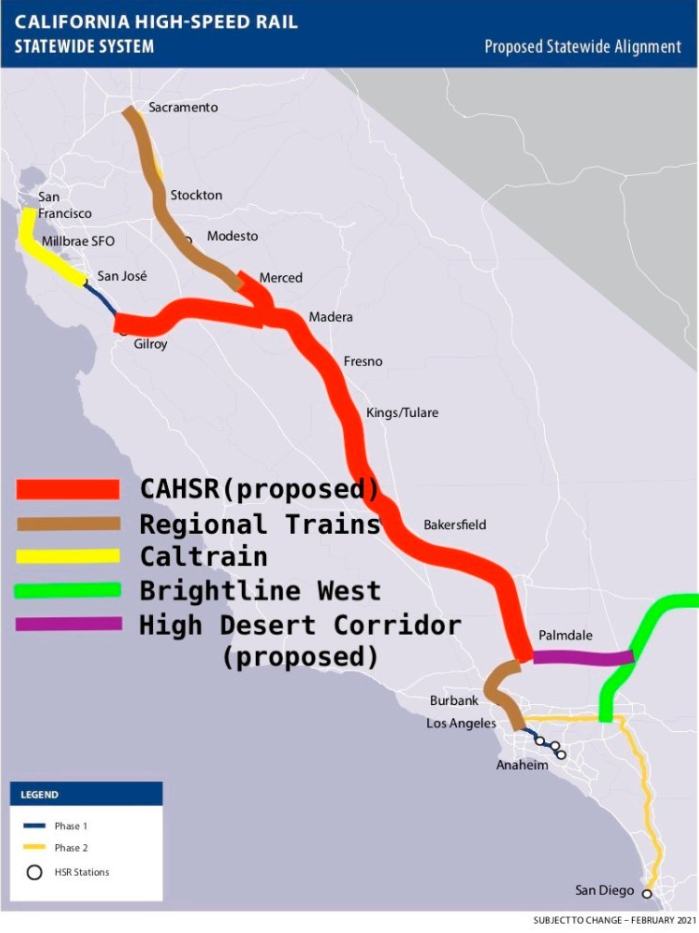
This scenario brings in Brightline West as the beneficiary to resurrect any sense of legitimacy to the CA project. Brightline West holds an invested interest to intersect its current LA to Las Vegas project into the CA HSR and CA’s forecasted lines. A zero-cost introductory agreement would enable that entity to finish the first (Bakersfield to Palmdale) segment and “promise” to build-out the remainder of the project under the same “no EIS” (Environmental Study) requirement process.
Selling (gifting) the CA HSR project to Brightline would greatly benefit Brightline West by increasing ridership of both systems. Furthermore, building-out the Palmdale to Gilroy segment of the CA HSR project would provide Brightline the economic motivation to continue a SF/Sacramento to LA route for the passenger capacity increase for connectivity to its current LA to Vegas segment.
3. Create PPP to build viable Statewide alternative transportation network. This scenario involves the non-political process of creativity. This would be utilizing the existing segmented HSR infrastructure and acquiring a modern transportation technology to be implemented within the corridor, then extending it throughout the State with existing allocated light-rail Rights-of-Ways (ROW), and beyond.
Several new technology transit systems exist for this scenario.
Choudri selected option 2. The process of political maneuvering to engage private sector participation is hidden taxation to clouded by large subsidies. It also maneuvers sharing tasks of compliance with other government agencies and bureaus to maintain bureaucratic overruns of management practices. By effectively partnering with a private entity, it removes the connotation of waste by ‘selling’ the project to a private entity. The process of engaging a public/private/partnership (PPP) where the State is able to leverage money spent is called an investment but, isn’t embarrassed if the project fails.
Of the project's three options, 1. do nothing 2. sell project to private entity 3. incorporate an advanced new technology transit system. This 3rd approach would massively reduce infrastructure and maintenance costs, dramatically increase ridership, operate with greater energy efficiency, run at significantly faster speeds, provide access to urban use, be much more passenger friendly and much more convenient to the public.
While options one and two benefit a select few participants in the building process, both options are feckless as a solution to CA’s exponentially increasing transportation problems. The third option, indeed improves quality of life for Californians by integrating modern transportation technology to the advances of modern society; which serve to enhance transportation for the public.
In September, State legislators committed $1 billion per year, over a four-year term, from CA’s cap and trade. This allowed the HSRA, in November 2025, to announce its Request for Proposals (RFP) for the bidding process of installing rail track and catenary from the Merced to Bakersfield line.
In December 2025 the CA HSRA launched its RFQ (Request for Qualifications) to accept qualifications towards the upcoming RFP (Request for Proposals) to participate as CA HSR partners with the State.
Also in December, the HSRA released the LA to Anaheim EIR/EIS (Environmental Impact Study and Report).
Choudri, in his call for the HSR partnership with the private sector is seeking legislation to temporarily terminate the State’s earlier commitment to take the track into Merced. Instead, he’s asking legislators to extend the track to Gilroy and Palmdale. Doing so would greatly benefit the Brightline West cooperation to connect their Rancho Cucamonga to Las Vegas project.
Can Choudri make it work? Perhaps, and again, Choudri is doing an exemplary job for the CA HSR.
CATTCC.org
Sustainable Transportation