Transportation's Near Future
Finding the near future of transportation
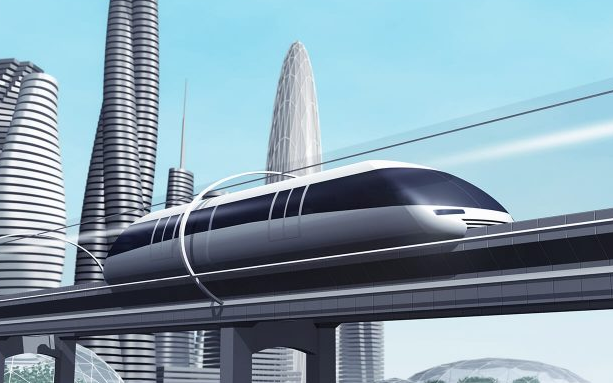
photo credits: freepik moonscape, crp.trb.org
Writing as an imagineer: designing the future of transportation is an important task. What does the future of transportation require? Convenience, fast speed, energy efficiency, safety, low cost of vehicles and infrastructure. There are two directions of necessity for modern travel: short distance and long distance (which includes space travel).
Short distance – For transportation to attain pace with society’s technological advances, levitation is required to reach the goals of convenience, fast speeds, energy efficiency, safety, and low costs of vehicles and infrastructure.
Long distance – To reach the technology advances of modern society, long-distance space travel requires the ability to manipulate gravity.
How does the future of transportation transcend beyond what is available today? The foundation of present-day transportation is based upon the past. The future is similar to the present; both are comprised with growth and decay; it changes with discovery. Inasmuch as life begins, it ends as time passes. So it is with new ideas as well. Technological change is only available with the private sector; new ideas are irrelevant to politics. Government policies are rhetorical hyperbole; theological rules of tradition are nugatory. And yet, the government regulates transportation, which is at least partially responsible for transportation’s stagnation into the past.
Transportation’s current pursuit is restricted to onboarding other industry technologies into the existing vehicle and infrastructure technologies. This renders the foundational technology of the three modern modes of transportation unchanged. That’s completely different than innovations for new modes of transportation. This brings a question.
How does transportation advance?
The purpose of questions is to find answers. How can new methodologies for modes of transportation be found without looking? The pursuit for new transportation innovations has to include venturing into a perception change in science. Nearly all of transportation’s current search is limited to propulsion-based movement. Yet, the result of non-traditional attraction-based motion space flight, have provided the fastest speeds ever accomplished by mankind; with the Parker Solar Probe.
The article, Directions for New Transportation, talks about the Parker Solar Probe: There are several aspects of conventional rocket technology that require new concepts to attaining adequate speeds for space travel to be practical. The most effective method for space travel is with the utilization of gravity. This has already been proven with several NASA missions. The most recent use of gravity is the Parker Solar Probe. It’s next loop using Venus’ gravity to accelerate the Parker Solar probe, will achieve a speed of 430,000 mile per hour.
The future to advance transportation technology, demands changing current methodologies. Discovery comes by engaging different perspectives. Some of the greatest scientific discoveries have been discovered by outsiders of the community of science academia. The best example is seen in today’s modern electricity-charged technology which is founded upon two rivals; Nikola Tesla and Thomas Edison. Nikola Tesla attend college but, didn’t graduate with a degree. Thomas Edison never attended college.
Nikola Tesla worked independently and received 300 patents worldwide, 112 US patents. Edison hired others to work under his name and received 2,232 patents worldwide, 1,093 US patents.
Over the past 100 years, technology has soared with tremendous growth. Conversely, modern transportation has only three modes of technology: the 200-year-old train, 125-year-old automobile, and 100-year-old aeronautics with airplanes. The entire industry of traditional transportation is locked in the pushing-motion mindset of propulsion-based travel.
Does science forecast a change in the transportation industry? It’s currently only engaged with adaptation of other industry innovations onto the three existing modes of transportation. How much active research is currently employed for a brand-new mode of transportation using attractive motion instead of propulsion? Is there research study to understand and copy nature for transportation based on the spin momentum of Earth’s rotation that keeps it in orbit?
When?
The social process of changing technology is called disruptive technology. Politics might be a constraint, however, there is an additional factor of restrictive force pushing against new transportation technology. Prior to introducing a disruptive transportation change, changing social acceptance of its transportation necessitates infrastructure. This requires an enormous cost to implement its infrastructure.
Throughout the CATTCC articles, is a constant realization regarding transportation: ‘All urban growth is based on its primary source of transportation.’ This is a recognition that any new mode of transportation will require a corresponding shift in an area’s pattern for urban growth.
Analyzing the impacts that a brand-new mode of transportation would incur is found in the article, New Modes of Transportation Technologies:
Impacts of a brand-new mode of transportation
Is there a correlation to a brand-new mode of transportation and lower real estate prices? With an efficient use of energy, transportation costs would be greatly reduced. New modes of transportation use dedicated and grade separate traffic rights-of-ways with computerized algorithms for vehicle synchronization. This provides safer transportation within allocated transportation corridors. Vehicle insurance costs would spiral down; to the consumer. The economic outlay of replacing cars with floating vehicles would substantially lower citizens’ tax burden for infrastructure costs. Overall, a brand-new mode of transportation would greatly upset the automobile centric land-use dependence of cars. This, however, requires that replacing automobiles can be replaced with a more convenient, faster, more comfortable, less expensive, safer, and more efficient type of vehicle.
The paragraph might sound like an idealistic marketing scenario, and yet, there is a great accuracy to its claims.
As cities grow larger, transit-oriented land-use is an insistent demand for transportation: it’s in the name. Transit-oriented land-use is vertical growth which coincides with mass transit by its nature of concentrated building. Since automobile centric land-use design is the implementation of single-story buildings, its land-use demand for transportation, requires sprawl of roads, massive land consumption for freeways, parking-lots and horizonal sprawl development. The concentrated vertical development land-use design of transit-oriented land-use causes conflict for automobile traffic in transportation use.
Tunneling
The only option for transportation accessibility with mixed-use land-use of transportation and future metropolitan urban growth infrastructure is multi-level single lane tunneling. This restrictive option for mixed-use land-use is the most beneficial, with the least expensive Infrastructure costs of implementation. Information regarding tunneling is addressed in the: Tunneling Transit article. From The Boring Company website: Why Tunnels? To solve the problem of soul-destroying traffic, roads must go 3D, which means either flying cars or tunnels are needed. Unlike flying cars, tunnels are weatherproof, out of sight, and won’t fall on your head.
Tunnels minimize usage of valuable surface land and do not conflict with existing transportation systems. A large network of tunnels can alleviate congestion in any city; no matter how large a city grows, more levels of tunnels can be added.
Transportation’s Future
Beyond today’s adaptation to current transportation methods, the article, Researching Future Transportation, makes the point that transportation changes are imperative: Changes to the future, require actions that alter things we do today. Changing tomorrow’s transportation can only be attained by searching to find alternatives for transportation motion. Stepping into the future and looking at its methods for transportation: it floats. This leads to an imperative necessity for researching gravity and the manipulation of its control.
What perception change in scientific advances can bring about transportation innovations towards developing new modes of transportation? Current scientific methodologies support the continuation of propulsion-based transportation technology for more power and thrust.
The article Discovering New Modes of Transportation examines hidden scientific areas regarding transportation. One of main topics discussed in the article is Electrogravitics, a relatively unexplored consideration in theoretical physics.
The gravitycentral.space article explains the question: what is electrogravitics? As to relevance for a discussion about electrogravitics, it delves into theoretical physics fundamentals. To study the potential use of levitation as a method for transportation motion, this path leads to finding practicalities with the makeup of matter in theoretical physics. Electrogravitics is proposed as a foundational component to the theory of particle mass composition. Electrogravitics is similar to electromagnetics but identifies gravity as the component of subatomic electric fields, rather than an electromagnetic reaction. This leads to speculation that gravity is a subatomic process, rather than a product of mass. With this perspective, electrogravitics holds more validation than electromagnetics as the source of particle charge.
Since this perspective alters basic fundamentals of quantum physics, it explains why T. Townsend Brown and others have been discounted. Academia teaches the unanimous scientific opinion and pursues that perspective. Why pursue a perspective that academia ignores? There is validity to electrogravitics. The theory of electrogravitics coincides with Einstein’s theory of General Relativity. In the postulation that all mass within the Milky Way Galaxy is traveling at the speed of light, the statement holds that all mass is traveling in a unified direction, giving credence to the unified field theory that all mass is consistent in flow of direction. This gives merit to electrogravitics as a fundamental component as an action to mass.
A scientific concept of gravity being a subatomic process of matter, rather than a product of mass; presents a new perspective. This perspective presents new considerations in technology for advancing transportation. CATTCC’s claim in A Study in Gravity suggests that gravity is a subatomic process rather than a product of mass. The article goes on to share that this does not negate gravitational laws that dictate its action. The claim further postulates that gravity is angular momentum of particle mass along the particle’s path of movement at light speed.
The manipulation of gravity is a vital aspect in the future of transportation. What will the technology be for the future of transportation? It’s found with the manipulation of gravity. Why gravity? It’s nature’s motion. Following the philosophy of Viktor Schauberger, one of the greatest geniuses regarding efficient transportation; comprehend and copy nature. Gravity already provides the fastest speeds ever achieved by mankind but, the opinion of scientific academia still has no definitive answer as to what gravity is. Science allows new theories to arrive from outside popular speculation. Tesla, Edison, Schauberger, Carr, Searl, and others have provided answers for advancing transportation to its modern potential.
The destructive nature of centrifugal force; explosion energy for propulsion-based transportation is inefficient.
CATTCC.org
Sustainable Transportation