Urban Growth as Corporate Push
Corporate push for urban growth and the sequence of crowding urban expanse
photo credit: vecteezy.com
Urban growth is a crucially important aspect to the environment of society’s concern, and yet, it’s a subject that’s extinct from entertaining social conversations. Even more so as a primary function of urban growth, is its transportation; since transportation is the foundation to all urban growth land-use design.
Study of transportation
In late 2024, The Brookings Institute compiled a study of transportation planning and urban growth. Connecting the DOTs: A survey of state transportation planning, investment, and accountability practices.
America’s transportation network is one of the country’s most valuable economic assets. The national network is massive, including 4.2 million miles of roads, over 140,000 miles of railways, and tens of thousands of ports and airports. Every day, that network sees over 1 billion personal trips and moves over 55 million tons of freight. Most of that infrastructure used to move all those people and goods is, critically, government-owned.
Maintaining such a vast network not only requires sizable public investment—often well exceeding $300 billion annually—but those investments must also be responsive to ever-shifting economic, social, and environmental needs. After decades of overall decline, roadway injuries and fatalities are back on the rise. Transportation continues to be the second-highest category of household spending after housing, with inflation especially high over the past two years. Transportation now emits the most greenhouse gases of any economic sector, while extreme weather continues to threaten the nation’s $6 trillion in government-owned transportation structures.
The study is an outline showing the importance of transportation infrastructure, prior to the study’s green-hyperbole editorializing.
Urban growth throughout States and Counties in the US, have regulatory standards to satisfy building and safety codes. Municipalities in most States have agencies to regulate transportation and urban planning growth. Large municipalities have strict bureaucratic procedures for compliance. The bigger the municipality the more stringent its policies and bureaucracy with political involvement. As such, a question of common sense has to be asked: what controls politics? Money. The natural flow to this course of action is a stratagem by large developers to maximize profitability of urban growth.
Dysfunction of unsustainable urban growth
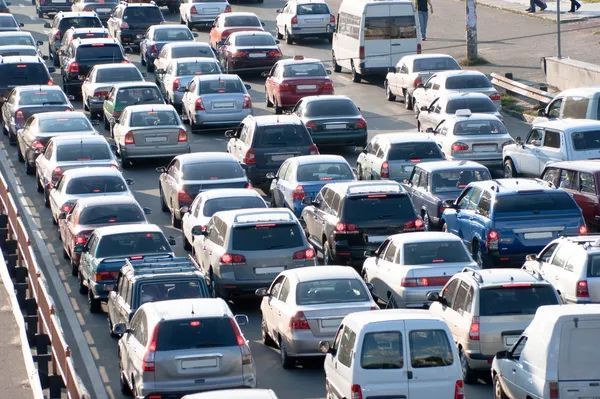
In the pursuit of profit, real estate developers’ lobbyists sell city council members and county supervisors on the taxable increases benefiting government coffers; from their condensed and multiple-dwelling housing of tiny lots and narrow streets. This social inconvenience of condensed tract-house developments is a dysfunction to the automobile centric land-use design. It horrendously exacerbates the capability of traffic flow for the entire community. Additionally, eliminating a family’s garden space in tiny lot developments is a blaring statement for the demise of environmental sustainability.
What’s the realistic approach for sustainable of urban growth? Significant change to urban growth has to involve politicians and industry lobbyists. What’s the motivation when profit is the only goal? Can a remarkable new transportation technology shift Western culture to explode into creating a new era in transportation that produces a market change?
For a change in urban growth, keep in mind that all urban growth is based on an area’s primary source of transportation.
Private sector profit increase and burdensome government taxation, by mandating smaller and smaller tract-housing lot sizes and narrow streets, force higher and higher price tags for the buyer. Individualized custom home quality is compromised by quantity of mass production. The design choices for home buyers in new yardless tract-house developments are largely restricted to not much more than fixture upgrades, quality grade of carpet, and color of wall paint.
And the apartment dwellers? Their continually increasing rental fees are a result of providing cash-cow investment returns to the growing number of corporate fund management portfolios. The only available choice to apartment dwellers, operated as corporate cash-cow profit centers; is the availablity of how much more money the renter can afford to pay for the property’s security.
Patterns of urban expansion
As urban growth areas expand, the older area dwellings deteriorate. The tax deductions disappear and a property’s maintenance increases. As buying trends change and newer developments shift to different areas, these older areas tend to flatline or decline in value; their lower cost attracts entry level and non-owner-occupied investors as rental properties.
This all points to the foundational component of all land-use function: transportation. There are only two types of available land-use designs for urban growth: transit-oriented design and automobile centric land-use design. The two land-use designs are dissonant, with totally different transportation functions. It is imperative to understand that transportation is the foundation to all urban growth. Transit-oriented land-use design is for vertical real estate development near transit stations. The closer the transit stations, the denser it necessitates more station sites. This establishes transit as the area’s primary source of transportation. Automobile centric land-use design is built for automobiles to provide transportation on surface streets and highways. The automobile centric land-use design is foundationally sprawling development with single story buildings, roads everywhere, and excessive parking availability.
The automobile centric land-use design consumes an average of 70% of its land-use dedicated to the automobile, leaving only 30% for the human component.
Streetcars and trains aren’t able to operate on streets; cars and buses are unable to run on train tracks.
There are four types of land-use. Only two of these four are available for urban growth; as the primary source of transportation. The selection of development in transit-oriented land-use is more restrictive than the automobile centric land-use design. The availability of land with the transit-oriented design (TOD) is limited to a short distance surrounding the transit stations.
Legislation of urban growth
The legislative actions of compressing land space, in the automobile centric land-use design, to restrict automobile movement and eliminate parking, under the guise of reducing vehicle miles traveled (VMT) as a method of “greenhouse gas” compliance; is a foolish act of delusion and ignorance. It’s a blind action that makes automobile centric land-use dysfunctional. Without a transit system to serve an area’s transportation needs, the legislative actions to legislate high-density into the existing automobile centric land-use designs can only serve to over-burden the already stressed and crowded roads.
California legislators lead the global push for environmentalism politics. Its recent bill, Assembly Bill 130 (AB 130, signed into law June 2025) imposes fees on new construction projects based on Vehicle Miles Traveled (VMT). The bill allows local agencies to charge VMT mitigation fees on new residential and commercial developments if the projects exceed local thresholds.
Critics estimate these fees could add $16,000 to $197,000 to the cost of a new home, with some projections suggesting up to $324,000 over a 20-year period, significantly impacting housing affordability. Developers can either pay into the VMT fund or provide alternative mitigation, such as improving local transit or biking infrastructure, to offset the project's transportation impact.
The legislators’ intent for this new influx of revenue is creating a funding source to finance affordable housing near transit, bike lanes, and pedestrian infrastructure to reduce car dependency. How do the burdensome increases in housing costs, create affordability of housing to the automobile centric land-use developed areas?
These are acts of legislative ignorance. Other related legislative actions, such as SB 9, SB 684, SB1123, and SB 79, all apply this same ‘goal’. These new laws allow building 1-10 plexes which override local zoning requirements, and provide State money (grants and cheap loans) for section-8 housing. These new laws are consistently hostile to California’s land-use and serve to cause extensive transportation dysfunction. These legislative actions are impossible applications to automobile centric land-use developed areas. Very few areas in California are built with transit-oriented land-use.
It’s simply that legislators are ignorant of the simple understanding that ALL urban growth is founded upon its primary source of transportation. California’s primary source of transportation is the automobile. If they want to legislate transit oriented urban growth, they must first build viable and modern fixed-rail transit technology systems.
The duty of politicians
Quality of life is the most essential commitment for every political office and every government servant. Improving quality of life is the primary task for government. However, the current stance on transportation is a pathetic disastrous move of selective ignorance. These harsh words are arrived at through experience.
After government officials are elected, and after government workers pass their probationary period and their employment is secured, when does improving quality of life for citizenry become important? The consequence of elected officials and government workers gaining a powerplay or a perpetual paycheck, becomes a loss to serving the public. Tyranny sinks quality of life into servitude to the dictator.
Trending
Trends are the cyclic marketing patterns of cultural fashion. Automobile manufacturers have design departments that work closely with their advertising and marketing departments to annually build new cars based on the shifts of cultural wants and desires. Each car that has ever been manufactured can easily be identified by the decade it was manufactured. Automobiles are a significant trend-mark of establishing social status.
Tract-houses mirror this same identifying fashion characteristic. Marketing of a product to increase profitability is consistent with real estate developer’s goals.
Explaining sustainable urban growth
What does sustainable urban growth actually mean? From the article: Why Current Urban Growth is Unsustainable, it defines where the phrase “Sustainable Urban Growth” originated.
The first official use of the term “sustainable development” came from a report in the 1980 World Conservation Strategy of the International Union for Conservation of Nature:
In 1983, the United Nations (UN) convened the World Commission on Environment and Development (WCED), which came to be known as The Brundtland Report. One of the conclusions identified three aspects for sustainable urban growth:
- Environmental
- Economic
- Social
In 1987, the UN debated the report which eventually led to the creation of the UN Commission on Sustainable Development in 1992. It grew into what is referred to as Agenda 21.
As the definition of sustainable development, Wikipedia states: “The Brundtland Report was intended to respond to the conflict between globalized economic growth and accelerating ecological degradation by redefining "economic development" in terms of "sustainable development". It is credited with crafting the most prevalent definition of sustainability:
"Sustainable development is development that meets the needs of the present without compromising the ability of future generations to meet their own needs."
The continual population increase to urban growth requires higher-density use with its transportation. This population influx also creates a larger land-use demand from nature and agriculture land-use.
Here’s a link to another CATTCC article explaining sustainable urban growth.
Solutions to reach sustainable urban growth
As often happens with a clash of emotion and intellect to human opinion, decisions of some experts become a difference of opinion to others, often who have no subject knowledge. This is particularly noticeable in political circles of those who are in political positions to thwart movement due to conflicting financial interests. The article: Politics in Transportation is a statement regarding decisions made by people in politics that have little comprehension or qualifications to make vital decisions that affect other people. And yet, their ineptness causes the horror of long term effects that cause chain reaction damage, effecting the lives of hundreds of millions of people. The article illustrates the lack of understanding the basic principle of urban growth: all land-use of urban growth is based upon an area’s primary source of transportation. Is this too difficult to grasp?
The best solution is written in the article Integrating California’s High-Speed Rail. This suggests the example of California’s unfinished High Speed Rail project, and integrating that infrastructure with California’s hundreds of miles of existing light-rail Rights-of-Ways (ROW) with brand-new modern transit system technology. This advanced transit system technology, built within that existing ROW would serve new transit- oriented land-use as the foundation to new urban growth construction with higher density real estate development along the existing transportation corridors, preserve its precious and highly productive farmland as well as conserving the Golden State’s beautiful nature.
This methodology is clearly detailed on the CATTCC website with the Central Transit project.
CATTCC.org
Sustainable Transportation