
Changing Deep Space Flight
New physics perspectives to advance deep-space-flight technology
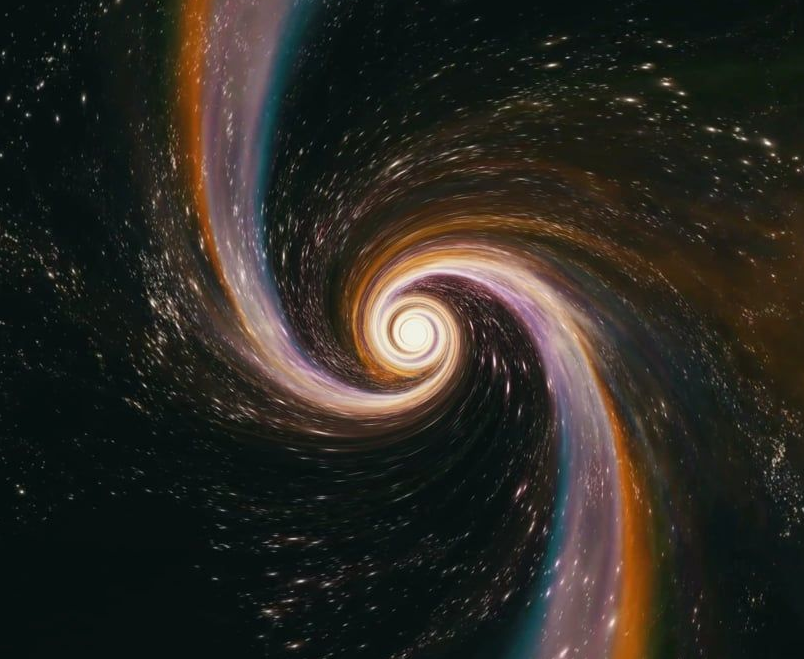
photo credits: vecteezy.com / pixabay.com
The future of transportation will dramatically change from what it is today. Both short-distance and long-distance space travel require new physics perspectives with modern technological advances. Movement in short-distance transportation will consist of levitation via the utilization of atmospheric layers of electromagnetism and the accumulation of vibrational mass. Long-distance space flight will use the manipulation of gravity and spin momentum of magnetism.
Short-distance is molecular manipulation, long-distance is particle manipulation. The process of manipulating particles and molecules require alternative perspectives in understanding the tradition of physics.
Exploring particle physics
There’s a question that might be argued against supporting the current strategy in particle physics. This opposing question is whether the current particle physics strategy of bombarding atoms to observe their fragmentation is conducive for the manipulation of particle motion. The investigation of particle motion would greatly advance deep-space transportation. A strategy that seeks to understand fundamental forces of particle motion rather than their disintegration would serve the engineering challenges of ultra-fast speed necessary for deep-space exploration.
This differing perspective highlights the distinction between fundamental research (discovering what matter is made of) and applied technology (developing transportation systems). The typical argument maintains that atom smashing is akin to smashing glass jars to learn about glass, the proponents note that such experiments reveal quarks, gluons, and new states of matter that could eventually lead to unforeseen technological breakthroughs, even if the path is not immediate.
The topic of this article is a rationalization to focus attention towards the practicality of a new direction for deep-space travel. This direction of attraction with gravity, rather than propulsion; can be a source of motion. This approach explores the path of frequency flow with particle mass.
Is there a way to validate different perspectives that differ from the accepted opinion of theoretical physics? The issue of the accepted opinion, without a clear definition of what gravity is, holds question to the legitimacy of its opinion.
Discovering the path of particle mass would be necessary for its manipulation. Advancing deep-space travel exploration should be found by aligning a craft’s speed with that flow of mass.
Einstein’s theory of relativity made the claim of space-time as a constant motion. He postulated relativity as lightspeed motion. Thus, life as our perception is traveling at lightspeed. This perception is the realization that all matter is not static. It acknowledges mass times the speed of light (MC) as constant motion.
The ongoing direction of interest in the theoretical physics community and academia is its pursuit to collide and bombard particles with nuclear accelerators for the purpose of exploding particle apart with fission reactions. The intent is an exploration into particle makeup.
The contention in this article is making the point that, providing Einstein’s theory of relativity is correct: all particle mass is traveling at lightspeed. It is the postulation of this article, and many other CATTCC articles, that all particles follow a specific unified path. This leads to the assumption that all theories of color and flavor with particle mass, are merely a consequence and reaction to a particle’s collision bombardment; along its path at lightspeed.
As a longtime student of theoretical physics, yet, without access to produce conclusive evidence; this author’s supposition has grown as a perspective for 50 years. This perspective has drawn a theory towards a unified field that is consistent with all matter as frequency patterns; albeit extremely short-wave lengths and lightspeed type motion.
Relevance to this article only relates to functions of transportation and the manipulation of gravity.
Siting two paragraphs from Deep Dive into Quantum Physics:
In accordance to Einstein’s postulation that all mater is flowing at light speed: all elements flow. All molecular combinations flow. That is to say: all matter has frequency. When an ampere of electrical energy flows, everything within that wave path is subjected to light speed squared. Static electricity is a collection of potential energy that is undirected, its flow is an electromagnetic centrifugal reaction. This is what Keely refers to as a 6:9 frequency.
When molecular structure is combined similar to the configuration of Otis Carr’s Utron, the balance in that structure is the 3:9 frequency. This pattern maintains the frequency of a large tetrahedron necessary for spin balance of momentum in transportation. This relates to the smallest shape of an element’s mass as a balance function of its path. Again, this perspective is aligned with the theory that the path of particle mass is its specific eight-pointed mobius pattern on a ribbon type linear course to follow its centripetal action at the speed of light.
Pursuing this perspective hosts a direction of questions to examine. Three paragraphs from: Theory for Fast Space Speed:
Applying theory to speed
The basis for mankind’s fastest space travel has been shown to be gravity. Current space travel technology displays that the most efficient consideration for space travel is gravitational attraction from a large planetary mass. Molecular density has a greater number of particles, this allows a larger amount of gravitational motion.
Another question: what gravitational influence does radiation of heat have to planetary bodies? The question arises from the ambient temperature of deep space. Gravity, as a function of particle motion, holds objects in orbit. Is heat an influence to gravity? The process of compression movement produces cold. This produces little to zero thermodynamic loss. Explosion technology produces massive thermodynamic loss.
In applying the tetrahedron shape to a space craft, its centripetal spin rotation a becomes a linear course direction of trajectory.
And a visualization for the pieces necessary to build a craft capable of extremely fast speed for space flight in the article; Adding to Possibilities:
Visualizing the build
Principle concepts to consider:
Tetrahedron
Magnetism
Toroidal field
Spin
Centripetal force
Vortex
Vacuum
Device to carry load
The article, Gravity Waves presents many valid points and also questions.
In the article, Gravity Surfboard, it gives this perspective:
The application of wave amplification could be applied to any material or group of molecules within a defined area. Was this the principle behind Tesla’s earthquake machine and could a similar application be effective? He built a device on the concept of spring tension. This reciprocating engine applied a constant force of steam to produce vibration. By perceiving this vibration with the term of frequency of light, the perspective for spring tension can be viewed as a light wave. Near the conclusion of describing his invention, he adds: “Another application of the invention is to move a conductor in a magnetic field for generating electric currents, and in these and similar uses it is obvious that these characteristics of the engine render it especially adapted for use in small sizes or units.”
Can the concept in application from Tesla’s machine be used as a source to generate an oscillation found in an electromagnetic switch? Could this be manipulated in a manner that would affect the subatomic flow of matter?
With the new theory of gravity being angular momentum of a twist in the linear path of particle mass at light speed, can a Tesla Reciprocating Engine accelerate or manipulate a gravitational wave to enable surfing that pattern of waves?
Such a device would employ the wave generator and a separate standing platform. The device would not look like nor would it operate like a traditional surfboard.
This leads to the Alcubierre drive. The concept of gravity waves indicates a similarity to the theory in 1994 by physicist Miguel Alcubierre. The Alcubierre Drive is a theoretical propulsion concept proposed by Miguel Alcubierre that suggests faster-than-light travel by contracting space in front of a spacecraft and expanding space behind it. While the mathematics of this warp bubble are consistent with Einstein's field equations, theorists opposing Alcubierre’s concept claim it requires negative energy or exotic matter, which has not been observed in nature, making its construction currently impossible.
A theoretical approach conceptualizing wave amplification of gravity waves and T. Townsend Brown’s Biefeld-Brown Effect brings a question of possible legitimacy to Alcubierre’s drive theory.
Conclusion
Does any of this discussion bring validation for attaining the necessity for ultra-fast speed of deep-space exploration? It presents concepts and asks questions that seek answers. These conversations are a must for expanding conventional physics to reach ultra-fast speeds that exceed lightspeed travel.
CATTCC.org
Sustainable Transportation