
Considerations in Lightspeed Space Travel
Seeking new considerations for space travel at lightspeed
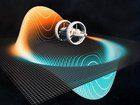
photo credits: Popular Mechanics free image - Alcubierre Drive, Reddit
In the mid-teens of 2000s, there were three people with notoriety and enough money to actively advance significant changes in the transportation industry. The three companies racing towards space exploration were: Virgin Galactic, Blue Origin, and SpaceX. The race is over; Elon Musk won the race. Having crushed his competition, Musk has doubled down and furthered his dominance. The Boring Company has grown to prevail over all privately held transportation infrastructure with its inground metropolitan transportation networks, the most innovative automobile technology available, as well as tremendous success with rocket technology.
Since it’s imperative to introduce new technological advanced transportation concepts to keep pace with society’s technical advances, considering the costs for implementing changes in transportation; it’s too large for a single individual. The hundreds of $millions The Boring Company is investing into its Las Vegas project provides a small glimpse of the massive infrastructure changes necessary to make an impact on transportation and its urban growth.
In the sphere of deep space flight, the ability for practicality: mandates ultra-fast speeds.
The article Theory for Fast Space Speed poses a reminder of Viktor Schauberger’s philosophy: “understand nature and copy it” as the necessity for efficient energy to be able to attain ultra-fast speeds. In building an ultra-fast space travel vehicle, all energy forces exerted; have to be contained within the field of the vehicle. Any exertion of energy force, such as a chemical or nuclear action would require that energy release to have its action interpreted as centripetal. Such reaction could conceivably be directed into a linear type rotational pattern. Engineering a device to interpret the explosive 360-degree energy release into a rotational linear pattern requires a multi-dimensional perception.
And again in the article Building for Fast Space Travel, it makes the claim that designs for ultra-fast speed of space travel, have no allowance for friction. To design a proper vehicle to fly in space, there can be no conflict from friction. For a vehicle to travel near lightspeed, or reaching lightspeed, it requires a vehicle using complete energy efficiency. Where can this be found?
All of human effort with current rocket launch technology has attained 0.000037279123279345 lightspeed.
What will it take to reach a fast enough speed essential for space travel? It requires a different perspective when considering the question. The energy waste with chemical explosions for propulsion are a technological embarrassment. Current rocket launch technology’s approach is “bigger bombs”. An explosion releases its energy in 360 degrees. The trajectory of a rocket is 1 degree. Even people with low math skills are able to figure out that 360 minus 1 equals 359. Rocket scientists have captured more than one degree of energy release, nonetheless, it still means chemical explosions as a method of propulsion are extremely inefficient.
The inefficiency of rocket technology is far too slow to be practical. This leads some people to ask the question: what is the goal of exploring space?
Why travel into space?
So, to the subject of space travel, there is a question: why? What’s the purpose for exploring space? Many people argue that Earth needs to solve its social problems before spending money to travel into space. One of the valid retorts to that position; is to provide the opportunity to escape from the senseless, redundant and valueless arguments of constant bickering.
What’s needed for deep space flight? Extremely fast speed. An excellent article about deep space travel is the article: What Space Exploration Requires. How realistic is deep space travel with today’s capability in space travel? Here’s an excerpt from the article: NASA’s planetary telescope missions suggest that Kepler-69c (Discovered in 2013) is the closest planet with the possibility to maintain life. It’s a super-Earth-size planet in the habitable zone of a star like our sun. But it’s located about twenty-seven hundred light-years from Earth, in the constellation Cygnus. This, of course means that getting there traveling at light speed would take 2,700 years.
The fastest speed human technology has thus far attained is 0.000037279123279345 lightspeed. Multiplying 0.000037279123279345 per second, times 34,000,000 seconds per year, times 2700 years, the Parker Solar Probe could reach Kepler-69c in 636,533,574,170 years.
Yeah, that makes it impractical.
Here are a few more numbers from that article to consider: Reaching the closest habitual planet, according to NASA, is twenty-seven hundred light years from Earth. That’s 14,112,000,000,000,000 (fourteen quadrillion, one hundred twelve trillion) miles away.
Light travels at 186,000 one hundred eighty-six thousand miles per second. There are 31,536,000 seconds per year. Traveling at lightspeed is 5,865,696,000,000 (five trillion, eight hundred sixty-five billion, six hundred ninety-six million) miles per year (figures are approximate).
The trip to the closest habitable exoplanet (Kepler-69-c) would take 2,700 years to reach, traveling at the speed of light.
An optimist can look at this, ignore past scientific achievement and look at this as a challenge with a different perspective for a solution. That same article notices more numbers: Following Einstein’s famous mathematical statement in his Theory of Relativity: energy equals mass times the speed of light squared. Multiplying the speed of light squared, without being multiplied by mass, is 34,596,000,000 (thirty-four billion, five-hundred ninety-six million) miles per second. Times 31,536,000 seconds per year, says that traveling at lightspeed squared, the miles traveled in a year is 1,091,019,456,000,000,000 (one quintillion, ninety-one quadrillion, nineteen trillion, four hundred fifty-six billion) miles per year.
Mathematically, this indicates that traveling at the speed of lightspeed squared, reaching the closest planet that could possibly maintain life, would be reached in about eight months.
Is this possible? This perspective approach validates deep space exploration. Quantifiable deep space travel becomes realistic at twice the speed of light. How can such speed be attained? To again repeat Viktor Schauberger’s philosophy: “understand nature and copy it.”
Today’s exploratory deep space travel is based on rocket launch technology. To visualize the subatomic action of explosion propulsion, it’s revealed as an extremely wasteful use of energy.
Schauberger explained; nature is centripetal. All explosions are a collision of centrifugal force. At the subatomic level, the action of a rocket launch is an explosion force releasing energy in 360 degrees but, a rocket’s trajectory is only one degree. Reaching light speed has to be 100% useful energy; flowing in synchronization with light movement.
How much research is required to eventually ask the question: are there alternative methods of space flight; other than explosion propulsion?
New theories in particle physics
Considering theories on the leading edge of fringe science can hold possible solutions for attaining what would otherwise impossible. Considering gravity as a potential source of motion for a space craft might hold value; since it has already been proven that attractive force far exceeds the limited speed of propulsion.
In A Study in Gravity, is a new theory which postulates a description of gravity. This article explains: The definition of its mechanics and how it works as a mathematical equation, was discovered with Isaac Newton’s gravitational laws that were established 400 years ago. These formulas are still the standard for the physics industry. It explains how gravity reacts. It doesn’t explain what it is.
The currently held belief of all matter; is every particle maintains elliptical orbits. The new theory identifies matter as Einstein’s theory claims; that all matter is moving at light speed. This speed nullifies a model of matter holding elliptical orbits. The new theory of gravity postulates that all matter, as moving at light speed is linear. This linear movement follows unified wave motions. It postulates a specific path of linear movement. Gravity is identified as the angular momentum of matter along this linear path.
This new theory of gravity identifies it as a subatomic process rather than a product of mass. It does not negate gravitational laws that dictate its action. In regard to the composition of subatomic matter and what is held by today’s physics, it is the procession of electromagnetic orbits. This new theory discounts orbital paths and defines them as linear.
This theory adds to T. Townsend Brown’s supposition of electrogravitics. What is electrogravitics? As to relevance for a discussion about electrogravitics it delves into theoretical physics fundamentals. Electrogravitics is proposed as a foundational component to the theory of particle mass composition. Electrogravitics is similar to electromagnetics but identifies gravity as the component to subatomic electric fields. This leads to speculation that gravity is a subatomic process rather than a product of mass. With this perspective, electrogravitics holds more validation than electromagnetics as the source of particle charge.
This new theory of gravity makes the point that magnetism is also the action of stray electrons in ferrous materials. With the introduction of electrogravitics as a primary function, rather than electromagnetics; as the subatomic process of its path, a question is raised to support its viablity: How can non-ferrous composition hold electromagnetic properties? It is the scientific claim that magnetism is an action of ferromagnetism. Because science has established magnetic action as ferromagnetism, how are magnetic properties able to exist in sub-atomic properties and yet lose their magnetic existence in large quantities of element mass that aren't ferrous? This new theory of gravity, being a subatomic process of each particle’s linear path, also accounts for the support of electrogravitics instead of electromagnetics.
Conclusion
What does a new theory of gravity have to do with deep space travel? It provides a new perspective which interacts with universal motion. It provides a new perspective that opens consideration to lightspeed travel. It stimulates conversational concepts beyond Alcubierre Drive.
CATTCC.org
Sustainable Transportation