Fibonacci Sequence and Transportation
Finding a relationship to nature's efficient energy and transportation
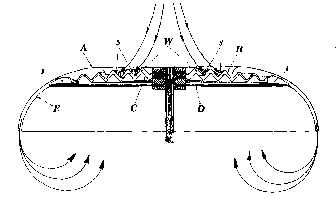
photo credits: pexels, pinterest
Is there a transportation relationship between the Fibonacci sequence, nature, the Cavity Structures Effect (CSE), frequencies, the sound of a sea shell and levitation?
The Fibonacci sequence is a series of numbers where each number is the sum of the two preceding numbers, starting with 0 and 1. This sequence begins as 0, 1, 1, 2, 3, 5, 8, 13, 21, 34, and continues infinitely. Mathematically, it is defined recursively by the formula Fn=Fn−1+Fn−2, with base cases F0=0 and F1=1. The sequence appears throughout nature, various areas of mathematics, computer science, and has been generalized to include negative integers, real numbers, and complex numbers through extensions like Binet's formula (the formula which directly links the Fibonacci sequence to the golden ratio).
Exploring the connections
Answering the question for finding similarities of CSEs, waves, levitation, and the Fibonacci sequence, in relationships with nature, leads to more questions.
Aspects of looking at nature to find efficient ways for mobility point to Viktor Schauberger. He was one of the greatest geniuses of the 20th Century regarding nature. Noted as by his philosophy: "Comprehend and Copy Nature", his genius was observing nature and implementing those ideas into water use and transportation.
Schauberger designed and built two airships. Although the ships had the ability to rise up into the air, their levitating capability was more of an applied force rather than slow and gentle levitation.
In pursuing efficient energy use in relation to motion with nature, Schauberger said the following: “If water or air is rotated into a twisting form of oscillation known as ‘colloidal’, a buildup of energy results, which, with immense power, can cause levitation. This form of movement is able to carry with it its own means of power generation. This principle leads logically to its application in the design of the ideal airplane or submarine… requiring almost no motive power.”
During World War II, as an Austrian citizen and notable inventor, Victor Schauberger was interned to a Nazi concentration camp and forced to work on a flying disk project using his ideas. It’s not known if the project was completed or, if the saucers actually flew in Germany. Reports vary, and no confirmed documentation remains. It is rather convincingly coincidental, however, that our own (US) pilots reported "strange flying disks" over Germany just prior to the War's end.
Reportedly, there were two flying discs: the Repulsine A and Repulsine B, also referred to as Repulsator' and the other a 'Repulsine'.
These devices are significant to transportation’s future as well as their fundamental design aligning with nature. The website Antigravity Technology provides a couple of illustrations and basic technological concepts of the Repulsine. Here are four paragraphs from that website:
To the Left is a picture of an original prototype showing the major components of the "Repulsine, type B" engine. The air, being drawn in from the top slits, is set into a spiral vortex movement. Schauberger had claimed that once the devise was set in motion, the primary motor could be switched off and the forces at work would power the generator, which was housed in a central location inside the craft.
The Repulsine uses the same phenomena. Cold water, drawn through a base hole, is spun in between the two wavy impellers and cools the air inside the units’ shell. As this partial vacuum draws in the air, it is spun into a cyclone by intake fins. After the air is cooled and humidified, still spinning, it is then expelled from an upper turbine, which reacts with the exiting cyclone. This centrifugal air has so much angular momentum that it is able to leave the Repulsine, even against a strong internal vacuum. That is a direct analogy to the rocking tank implosion-based water pump, described above.
The hot, rising vapor, trapped in a snail-shaped chimney, is lighter than the surrounding dry air and adds to the suction on the Repulsine's top. The upper turbine, spun by the exiting cyclones' action, directly drives the internal wavy vaporizing discs, which atomize the cold intake water. The electric motor (used for starting purposes) only has one purpose, and that is to spin up the vaporizer so that it properly atomizes the cold water from the inlet hose. The power source is implosion of hot, dry, desert air.
Remember that the power source is the Thermal difference between cold ground water and hot, dry desert air, just as is done in the implosion tank-rocking water pump from Texas. There is no mystery here. This device does nothing but convert the energy present in the combination of cold ground water with hot dry atmosphere. That is how it actually works. In many ways, it is similar to Schauberger’s water turbine, which also uses a pulsed pressure reservoir. Keep in mind that without the cold-water input, the pulsating vacuum trapped inside the Repulsine soon diminishes and stops. There is a lot of mystery behind this device.
One of the world’s best informative authors for scientific analysis on the leading edge of transportation innovation, is, Julio C. Gobbi. He published an incredibly detailed analysis of Schauberger’s discoid aircraft, titled: Schauberger Technology. Schauberger’s approach was different than aeronautic engineering’s reliance on lift of centrifugal force for pushing an object through air with the resistance of friction. Schauberger developed a discoid aircraft with its production of atmospheric air vortexes.
Here are two paragraphs from his paper: With the understanding of natural processes and their application in the control of rotational movements of fluids inside tubes, Schauberger learned how to use the dynamics of natural movements for the development of several devices, among them, the discoid models called Repulsine. In these machines, the tube processes were transferred and configured as a centrifugal air chamber that alternatively brakes and pulls the air fluid which moves through it. These devices created air vortexes by rotating the chamber with high-speed electric motors (from 10,000 to 20,000 RPM), and were so powerful that the traction force of the air currents accelerated the entire machine upwards.
When the chamber rotated, considerable suction was created in the central inlet ducts of the chamber as a result of the centrifugal forces that dragged the fluid radially to the periphery. The aqueous or air fluid directed inward was sucked through the low-pressure chamber (made, says Schauberger, of inorganic silvered copper), where this flow was “pumped” by flow restrictors across the circumference (which could make up concentric rings), located inside the chamber in order to mold and momentarily exert pressure on the fluid flow. In addition to these centrifugal forces (axial to radial), the rotating forces are operating perpendicularly to the centrifugal forces, dragging the air fluid into the low-pressure chamber. Here occurs what Schauberger called a transition promoted by planetary movement together with a rhythmic change in suction and braking pressures. This alternating motion causes the dissociation process of oxygen and carbon from the air that flows through the chamber into two separate components.
Julio’s detailed explanation of Schauberger’s vortexes brings rise to the probable similarities of conjunction to Fibonacci sequence. There is speculation that the Fibonacci sequence could be applied mathematically with a toroidal form for the unified-field theory.
Sidenote
A very interesting story about Viktor Schauberger from a delisted website:
Once again, he was the victim of deceit and his ideas were usurped, for, in a later letter to his son Walter, he wrote that copies of the preliminary application had been fraudulently obtained by Prof. Ernst Heinkel, the famous aircraft designer, through a firm of patent attorneys, Lehmann-Harlens in Berlin. By mining the information contained in this document, Heinkel obtained insights into how a jet-engine could be produced, even though he misinterpreted its findings; his first prototype exploded due to his lack of proper understanding. With a certain absence of principle, he then sought Viktor's collaboration in the project. Although some initial discussion eventually took place, Viktor did not cooperate, having become aware of what Heinkel had done, and further contact between the two men ceased. Using his ill-gotten gains, however, Heinkel persevered with his research, which culminated in the construction of the first successful jet-plane, its first flight being on August 27th, 1939.
Although Heinkel never had the honesty to reveal the source of the ideas for his invention, keeping all the kudos for himself, this jet plane was nevertheless built as a direct result of Viktor's theories. Viktor Schauberger is therefore the real father of the present jet age. He even went as far as to state that in order to develop and build fast-flying, supersonic aircraft successfully, the bodily forms of deep-sea fish should be copied. Today's 'stealth bombers' very much emulate these forms. In 1939 Viktor's personal research virtually came to an end, all the materials he needed being appropriated for war production. In 1941, however, he was summoned by Air Marshal Ernst Udet to discuss the growing crisis of energy production and means of solving it. Premises were subsequently set up near Augsburg for research and development, all of which came to nothing partly due to the death of Udet and partly because it was bombed by the Allies in 1942.
The significance to adding this, is with the comment that Schauberger’s technology opposed propulsion and the entirety of Heinkel’s jet engine technology industry is founded on the inefficiency and misunderstanding its original intent of attractive movement, rather than forcing propulsion.
Conclusion
Viktor Schauberger was a man of gifted genius insight. He paved a path of an amazing perspective. It requires more and intense study. As for this article’s intent of finding correlations to the Fibonacci sequence, wave frequency, and CSE’s, the study and research continues.
CATTCC.org
Sustainable Transportation